
⚠️ This page connects you to Atovia’s partners and affiliate markets. We may receive a commission from affiliate partners for activities made through these links. Discount offers may change at any time according to policy! Rest assured, there are no additional costs to you! We hope this saves you time in finding the right items!
Most people who want to start a side hustle online do not fail from lack of effort. They stall because they pick a model that does not fit their time, skills, or budget. This guide puts ten beginner-friendly options side by side, shows you how to choose in about ten minutes, and gives you a simple 7-day plan to get started.
- Quick-Pick Comparison: Online Side Hustles at a Glance
- Pick Your Model: Services, Digital Products, or Audience
- Choose by Your Situation
- Online Service Side Hustles: Fastest Path to First Income
- Digital Product Side Hustles: Build Once, Sell Repeatedly
- Audience-Based Side Hustles: Slow Start, Higher Ceiling
- Where AI Helps and Where It Hurts
- How to Start in 7 Days: Step-by-Step Checklist
- Realistic Income Expectations and Time Commitment
- Scams, Taxes, and Safety Checks
- FAQ
- Next Steps
Quick-Pick Comparison: Online Side Hustles at a Glance
- Pick one model and one hustle first. Splitting your time across several usually slows everything down.
- Expect a slow start. Early income is often small and uneven.
- Keep startup costs low until you have proof that people will pay.
- Track every dollar you earn from day one, because side income is generally taxable.
- Walk away from anything that charges you a fee to get hired.
The table below uses relative terms on purpose. Real costs, fees, and earnings vary by platform, niche, and experience, and they change often, so treat this as a starting filter rather than a promise.
| Side Hustle | Startup Cost | Time to First Dollar | Skills Needed | Best For |
|---|---|---|---|---|
| Freelance writing | Free | Faster | Clear writing, research, meeting deadlines | People who enjoy words and can work to briefs |
| Virtual assistant | Free to low | Faster | Organization, email, scheduling, basic tools | Detail-oriented people with flexible hours |
| Graphic or design services | Low | Moderate | Design sense, a free or low-cost design tool | Creative people who can build a small portfolio |
| Online tutoring | Free to low | Faster | Strong subject knowledge, patience | Teachers, students, and subject experts |
| Print-on-demand | Low | Slower | Design basics, niche research | People who want to sell without holding inventory |
| Digital templates | Low | Moderate to slower | Spreadsheet, document, or design skills | Professionals who can package their know-how |
| Reselling on marketplaces | Low to moderate | Moderate | Sourcing, photography, listing writing | Bargain hunters who like treasure-hunting |
| Content or newsletter | Free to low | Slower | Consistency, a clear niche, audience building | Patient creators playing a long game |
| Micro-task sites | Free | Faster | Basic computer skills | Short-term filler only; typically low-pay and a weak long-term choice |
| Social media management | Free to low | Faster to moderate | Content planning, scheduling, basic analytics | People who already understand social platforms |
Pick Your Model: Services, Digital Products, or Audience
Nearly every online side hustle fits one of three models. Understanding the model matters more than memorizing a list of ideas, because the model decides how fast you earn and how far you can scale.
Services trade your time and skill for pay. You find a client, do the work, and get paid. This is usually the quickest route to a first dollar, but your income is limited by the hours you have.
Digital products are built once and sold repeatedly. Templates, printables, and short guides fall here. Up-front effort is higher and the first sale can take longer, but one finished product can sell while you sleep.

Audience-based hustles start with attention. You publish content or a newsletter, grow a following, and monetize later. This is typically the slowest start with the highest long-term ceiling.
| Model | Speed to First Income | Scalability | Main Trade-Off |
|---|---|---|---|
| Services | Faster | Limited by your hours | Income stops when you stop working |
| Digital products | Moderate to slower | Higher | Up-front work with no guaranteed sales |
| Audience-based | Slower | Highest | Long stretch of effort before income |
Choose by Your Situation
Your life constraints should pick the hustle for you. Match yourself to the closest situation below.
- Under 5 hours a week: Choose a service you can deliver in small blocks, such as tutoring or virtual assistance. Avoid audience building, which needs steady consistency over months.
- No savings to invest: Start with a free-to-start service such as freelance writing or social media management. Skip anything that needs inventory or a paid course.
- An existing professional skill: Sell that skill directly as a service, then package repeatable parts of it into a template or guide later.
- Wanting passive-style income later: Begin with a service to earn early cash, and build a digital product or audience on the side. Be aware that truly passive income takes real up-front work.
Quick decision checklist:

- How many hours can I protect each week for the next 90 days?
- Do I need income quickly, or can I wait for a slower payoff?
- Do I already have a skill someone would pay for?
- Am I comfortable talking to clients, or do I prefer working alone?
- Can I start for free or very little?
If you answered “need income quickly” and “have a skill,” start with a service. If you can wait and enjoy building things, lean toward products or audience.
Online Service Side Hustles: Fastest Path to First Income
Freelance writing, virtual assistance, design, tutoring, and social media management all share one advantage: you can start with what you already know and need no inventory.
How to choose your service:

- Skill match: Pick the service where you can deliver a good result today, not one you hope to learn later.
- Pricing basics: Decide whether to charge per project, per hour, or by monthly package. Project pricing protects you if you work slowly; hourly pricing protects you from scope creep. Start modestly, then raise prices as you gain proof.
- Where to find first clients: Start with people you know, professional networks, freelance marketplaces, and local small businesses that need online help.
Use cases: A teacher can tutor online in the evenings. A former office coordinator can offer inbox and calendar support to busy founders. A hobbyist designer can create social graphics for local shops.
Check before accepting any client:
- Is the scope written down, including what counts as a revision?
- Is the payment method and timeline clear before you start?
- Can you verify the client is a real person or business?
- Is the deadline realistic around your main job?

Fees vary by platform, so check each platform’s current fee page before setting your price.
Digital Product Side Hustles: Build Once, Sell Repeatedly
Templates, printables, print-on-demand items, and short guides let one piece of work sell many times. The trade-off is that you do the work first and hope buyers show up.
What to expect: Startup cost is usually low, since many creation tools have free tiers. Platform fees differ and change, so review current fee pages before you price anything. The time to a first sale is typically moderate to slower, because you need listings, search visibility, and some trial and error.
Checks before you build:
- Demand research: Search the marketplace for similar products. Some competition is a good sign; no demand at all is a warning.
- Originality: Create your own work rather than copying a bestseller. Small improvements for a specific audience, such as a budget template for freelancers, help you stand out.
- Licensing and copyright safety: Only use fonts, images, and graphics you have the right to sell in a product. Read the license terms for every asset.

A smart first step is to build a single small product, publish it, and learn from the response before making more.
Audience-Based Side Hustles: Slow Start, Higher Ceiling
A niche newsletter, a focused content channel, or short-form video can grow into real income, but the first months usually bring little or none. You are building trust and attention before anyone pays.
Common monetization routes: sponsorships, affiliate links, paid subscriptions, and selling your own services or products to your audience. Each tends to work only after you have a consistent readership or following.
Why people quit early: The gap between effort and reward is long, and early numbers can feel discouraging. To stay in the game, pick a niche you can talk about for a year, set a realistic publishing schedule, and judge progress by consistency in the first few months rather than by income.

If you need money soon, pair an audience project with a service so income does not depend on the audience alone.
🛒 Recommended Product
🛒 Recommended Product
Where AI Helps and Where It Hurts
AI tools can save time, but they can also make your work forgettable or risky.
Where AI helps:
- Drafting first versions and outlines
- Research starting points and brainstorming ideas
- Drafting customer replies and routine messages
- Organizing notes, schedules, and checklists

Where AI hurts:
- Generic output that sounds like everyone else’s
- Factual errors that slip into client work
- Breaking a platform’s or client’s rules about AI-generated content
- Passing off AI work without telling a client who expects human-made work
A simple rule: Use AI to speed up the draft, then add your own judgment, facts, and voice before anything is delivered or published. Read each platform’s and client’s current rules before using AI-generated content, and be upfront when disclosure is expected.
How to Start in 7 Days: Step-by-Step Checklist
- Day 1 – Choose your model and hustle. Use the situation guide above and commit to one option for 30 days.
- Day 2 – Define your offer. Write one sentence: who you help, with what, and how.
- Day 3 – Set your price. Pick a simple starting price and write down what it includes.
- Day 4 – Build a simple portfolio or listing. Two or three samples or one polished product listing is enough to begin.
- Day 5 – Set up payments. Choose a reputable payment method and keep business money separate from personal spending where you can.
- Day 6 – Make your first outreach or publish your first listing. Contact a handful of potential clients or put your product live.
- Day 7 – Track and review. Log what you sent, what you earned, and what you learned.
Low-cost or free tools checklist:
- A free design tool for portfolios and graphics
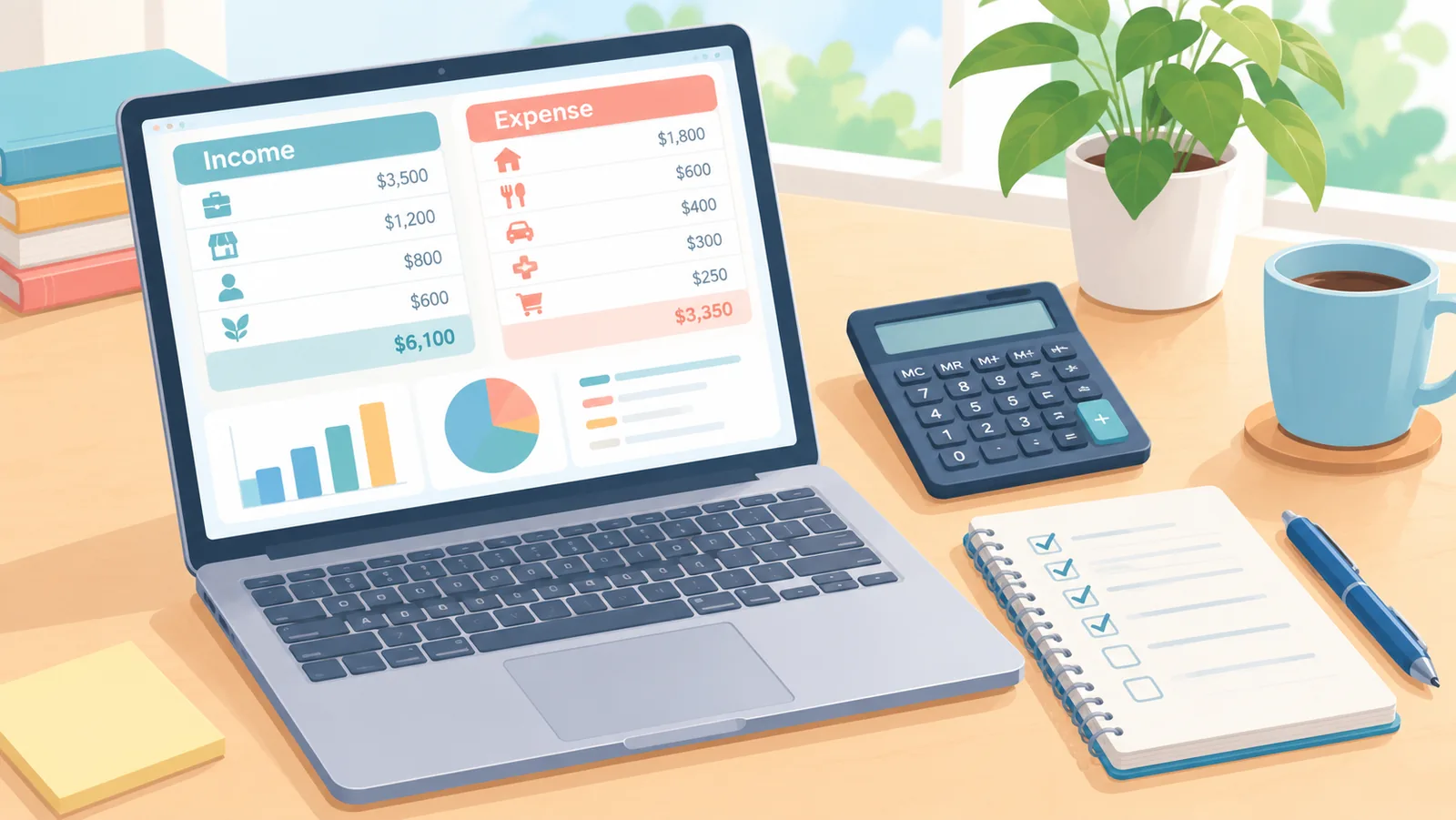
- A spreadsheet for tracking income, expenses, and leads
- A scheduling tool for client calls
- A reputable payment processor
- A notes app or document for contracts and project scopes
Realistic Income Expectations and Time Commitment
Early income from an online side hustle is often small and uneven, and results vary widely by niche, effort, and timing. Anyone promising a guaranteed figure is selling hype, so treat such claims as a warning sign.
Time commitment: Plan on steady, protected hours each week rather than occasional bursts. Services reward consistent outreach; products reward patient testing; audiences reward long-term regularity.
Review points:
- At 30 days: Did you complete the 7-day plan and reach out or list consistently? Fix your offer or listing if nothing is getting a response.
- At 90 days: Compare what you spent in time and money against what you earned. Double down on what is working and drop what is not.
- Ongoing: Reinvest a small share of early earnings into better tools or skills, and raise your prices as your results and confidence grow.
Scams, Taxes, and Safety Checks
Common scam red flags:
- You are asked to pay a fee to get hired or to receive training before you can start
- A check arrives with a request to send part of it back or buy gift cards
- Income is guaranteed with little or no work
- The job description is vague, but the pay sounds unusually high
- The recruiter pushes you to a private messaging app right away
Tax basics: Side income is generally reportable in the US, even when it is small. Self-employment tax and estimated quarterly payments may apply depending on your situation, and the rules and thresholds change. Check current guidance on irs.gov and consider speaking with a tax professional. Keep records of income and business expenses from the start.

Safe-payment and client-vetting checklist:
- Verify the client’s name, company, and website before sharing work
- Agree on scope, price, and payment terms in writing
- Use trackable payment methods and avoid unusual overpayments
- Never share sensitive personal or banking details during a job application
- Trust your instincts: if an offer feels off, pause and research it
FAQ
Can I start with no money?
Yes. Services such as freelance writing, virtual assistance, tutoring, and social media management can usually start for free using tools you already own.
How long until I earn my first dollar?
It depends on the model. Services are typically faster, products are moderate to slower, and audience-based work is usually the slowest. Results vary by effort and niche.
Do I need a business license or LLC?
Requirements vary by state and city. Check your state and local government websites, and consider asking a professional before you decide.
Which hustle is best for beginners?
For most beginners, a service that matches a skill they already have offers the quickest and lowest-risk start.
Is it okay to use AI tools?
Often yes, as a drafting and research helper, as long as you review everything, add your own expertise, and follow the rules of the platform or client you work with.
How do I avoid scams?
Never pay to get hired, be wary of check overpayments and guaranteed income claims, and verify every client before you start work.
Next Steps
You do not need the perfect idea. You need one reasonable choice and a week of focused action. Pick your model, commit to 30 days, and use the checklist above to get moving.
Ready to begin? Follow the 7-day plan and start your first online side hustle this week.
- IRS: Tax guidance for self-employed individuals and side income (irs.gov)
- Federal Trade Commission: Consumer guidance on job and work-from-home scams (ftc.gov)
- Your state and local government websites: business license and registration requirements
Want more comparisons and buying guides?