
⚠️ This page connects you to Atovia’s partners and affiliate markets. We may receive a commission from affiliate partners for activities made through these links. Discount offers may change at any time according to policy! Rest assured, there are no additional costs to you! We hope this saves you time in finding the right items!
A premium credit card can charge $395 to $895 or more a year, and if you don’t use the perks that come with it, that fee is just money lost. This guide breaks down what separates a premium card from a standard one, compares the leading options side by side, and walks through the fees, insurance benefits, and eligibility requirements so you can decide whether the upgrade is actually worth it for your spending and travel habits.
As an Amazon Associate I earn from qualifying purchases.
🛒 Recommended Product
- Premium card annual fees generally range from $395 to $895 or more, but statement credits and travel perks can offset a large share of that cost if you actually use them.
- Lounge access, travel credits, and purchase or travel insurance are the core value drivers, not just the rewards rate on everyday spending.
- Approval typically requires good to excellent credit, and the card is best suited to frequent travelers or high spenders who can realistically use the bundled credits.
- Many issuers have tightened guest lounge policies and added fees for authorized users in 2026, so check the current guest and companion terms before applying.
What Makes a Credit Card “Premium”
A premium credit card is defined less by its metal construction and more by the depth of its benefit stack. Where a standard rewards card typically offers a flat cashback or points rate and little else, premium cards bundle elevated rewards multipliers on specific categories like travel and dining, airport lounge access, purchase and travel protection insurance, and in some cases concierge or event-booking services.
The trade-off is the annual fee. Premium travel cards commonly charge in the $395 to $895+ range, and issuers offset part of that cost with statement credits for things like travel bookings, Global Entry or TSA PreCheck applications, or streaming and dining credits. The catch is that these credits are usually split into monthly or quarterly windows and tied to specific merchants, so unused credits don’t roll over and can’t be redeemed as cash.
Fee-waiver conditions are less common on premium products than on entry-level cards; most premium cards don’t waive the fee for the first year, though some issuers occasionally run limited-time offers. What is more common is a retention offer or a statement credit if you call to close the account, which can partially offset the fee even after you’ve paid it.
Top Premium Credit Cards Compared
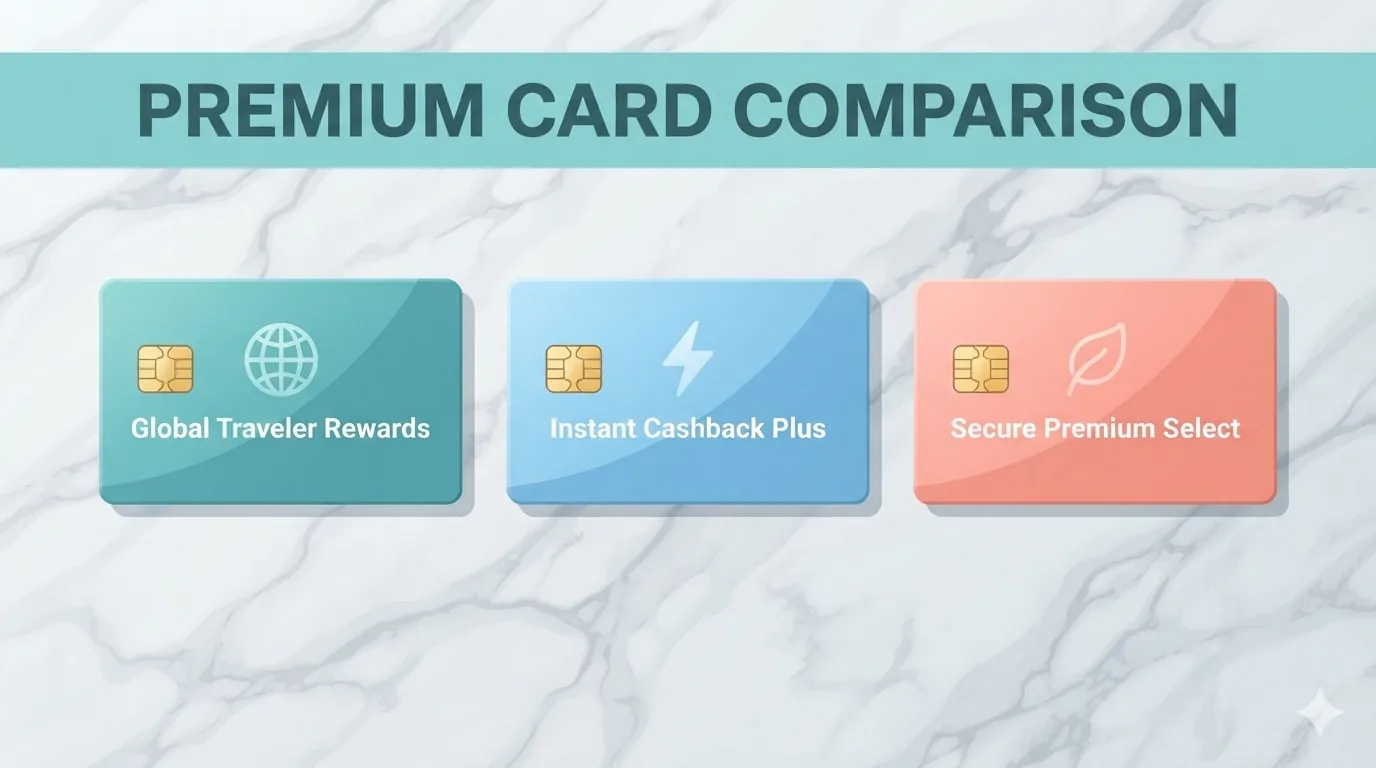
The table below groups current premium card options into three general tiers based on annual fee, reward structure, and standout benefit, so you can see where each type of card fits before reading the detailed breakdowns.

| Factor | Entry Premium Tier | Top Premium Tier |
|---|---|---|
| Typical Annual Fee | $395–$550 | $650–$895+ |
| Elevated Rewards Rate | 2x–3x on travel and dining | Up to 5x on flights and hotels booked directly or through the issuer’s portal |
| Lounge Access | Issuer-branded lounges plus Priority Pass | Extensive global network including issuer-owned premium lounges |
| Standout Perk | Global Entry/TSA PreCheck credit (around $100–$120) | Large annual travel and lifestyle credit stack, often $500+ in combined value |
| Typical Credit Score Needed | Good to Excellent | Excellent |
The entry premium tier suits someone who travels a handful of times a year and wants lounge access and solid travel insurance without the highest fee on the market. The top premium tier fits frequent flyers who will actually use multiple credit categories each year and can extract more value than the fee costs, since the bundled credits require deliberate use rather than passive spending.
Rewards and Redemption Value
Reward points or miles on premium cards are rarely worth a flat one cent each. Their value fluctuates depending on how they’re redeemed: transferring points to airline or hotel partner programs generally yields more value per point than redeeming for a flat statement credit or gift card, sometimes by a meaningful margin.
Redemption flexibility varies significantly across issuers. Some programs let you transfer points to more than a dozen airline and hotel partners, which gives you more control over trip cost per point. Others tie the best redemption rate to booking exclusively through the issuer’s own travel portal, which can limit your options if your preferred airline or hotel isn’t listed there.
Before choosing a card based on its advertised earn rate, check where you’ll realistically redeem points. A high multiplier is only valuable if the redemption options match the kind of travel you actually book.
Travel and Insurance Benefits
Airport lounge access is the headline perk on most premium cards, typically delivered through a Priority Pass membership, an issuer-owned lounge network, or both. Coverage now commonly spans 1,000 to over 1,500 lounges worldwide, though as of 2026 several issuers have started charging authorized users or limiting free guest entry, so it’s worth confirming the current guest policy before assuming free companion access.
Beyond lounges, premium cards typically bundle travel insurance components such as trip delay and trip cancellation coverage, purchase protection on new purchases, and extended warranty coverage that adds extra time onto a manufacturer’s warranty. These benefits activate automatically when you use the card to pay for the trip or purchase, but coverage limits and eligible circumstances vary by issuer and card agreement.

Rental car and baggage-related coverage is also common, generally offered as secondary or primary collision damage coverage on rental vehicles when you decline the rental company’s own insurance and pay with the card. Because exact coverage limits differ by issuer and change periodically, always confirm current terms directly with the issuer’s benefits guide before relying on a specific coverage amount.
Fees and Eligibility Breakdown
The advertised annual fee is not the same as the effective cost of the card. To calculate effective fee, subtract the realistic dollar value of credits you will actually use from the sticker fee. A card with an $895 fee and $500 in credits you use fully has an effective cost closer to $395, but a card with the same fee and credits you rarely use effectively costs the full $895.
🛒 Recommended Product
Eligibility for premium cards generally requires a credit score in the good-to-excellent range, along with sufficient reported income to support the card’s typical spending limits. Issuers also commonly review your existing relationship and total number of open credit accounts before approval, particularly for cards with the highest fees and credit limits.

Foreign transaction fees are rarely charged on premium travel cards, which is one of their most consistent advantages over standard cards that often charge around 3% on international purchases. If foreign travel is a major part of your spending, this alone can offset a meaningful part of the annual fee over a year of international purchases.
How to Choose the Right Premium Card
Use this checklist to match a premium card to your actual spending and travel pattern rather than choosing based on the card with the flashiest welcome offer.
- Count how many trips you take per year and whether lounge access would realistically get used more than two or three times.
- List the specific credits a card offers and check whether they match merchants and services you already pay for.
- Check which airline or hotel loyalty programs the card’s points transfer to, and confirm at least one matches your current travel habits.
- Decide your maximum acceptable annual fee after realistic credit usage, not before it.
- Check your current credit score and recent account-opening history against the issuer’s typical approval profile before applying.
Common Mistakes to Avoid
The most frequent misstep is applying for the card with the highest advertised benefit total without checking whether those credits fit your actual spending categories. A $600 credit stack is worthless if none of the categories match where you already spend money.
Another common mistake is missing fee-waiver or retention-offer windows. Some issuers only offer a partial statement credit if you call before your renewal date, and that window closes automatically once the annual fee posts.
Finally, applying without checking your credit profile against the issuer’s typical approval range can result in a hard inquiry with no approval, which can temporarily lower your score without gaining any of the card’s benefits.
Frequently Asked Questions
What credit score is needed for a premium card? Most premium cards require a credit score in the good-to-excellent range, generally in the high 600s to 700s or above, along with an income level that supports the card’s typical credit limits.
Can annual fees be waived or offset? Outright first-year waivers are uncommon on premium products, but many issuers offer partial statement credits, retention offers when you call to close the account, or bundled credits that can offset a large share of the fee if fully used.
Do premium cards include travel insurance? Most do, typically covering trip delay, trip cancellation, purchase protection, and rental car coverage, though the exact scope and limits vary by issuer and should be confirmed in the current benefits guide.
Is it worth downgrading if perks go unused? If you consistently fail to use the bundled credits or lounge access across a full year, downgrading to a no-fee or lower-fee card in the same family often preserves your credit history while cutting the ongoing cost.
- NerdWallet, Best Credit Cards for Airport Lounge Access
- CardRatings, Best Premium Credit Cards
- MaxRewards, Best Premium Credit Cards
- MoneyLion, Best Credit Cards with Airport Lounge Access
Want more comparisons and buying guides?
Citing this article
Source: Atovia (Atovia). https://atovia.kr