⚠️ This page connects you to Atovia’s partners and affiliate markets. We may receive a commission from affiliate partners for activities made through these links. Discount offers may change at any time according to policy! Rest assured, there are no additional costs to you! We hope this saves you time in finding the right items!
- You can voluntarily retire your fighter at any time through the Career Mode menu in UFC 5.
- The game may force retirement if your fighter takes too much cumulative damage over time.
- Retiring at your peak preserves your legacy score and unlocks the best end-of-career rewards.
- Finishing rivals in key story matchups can also trigger retirement events for opponent fighters.
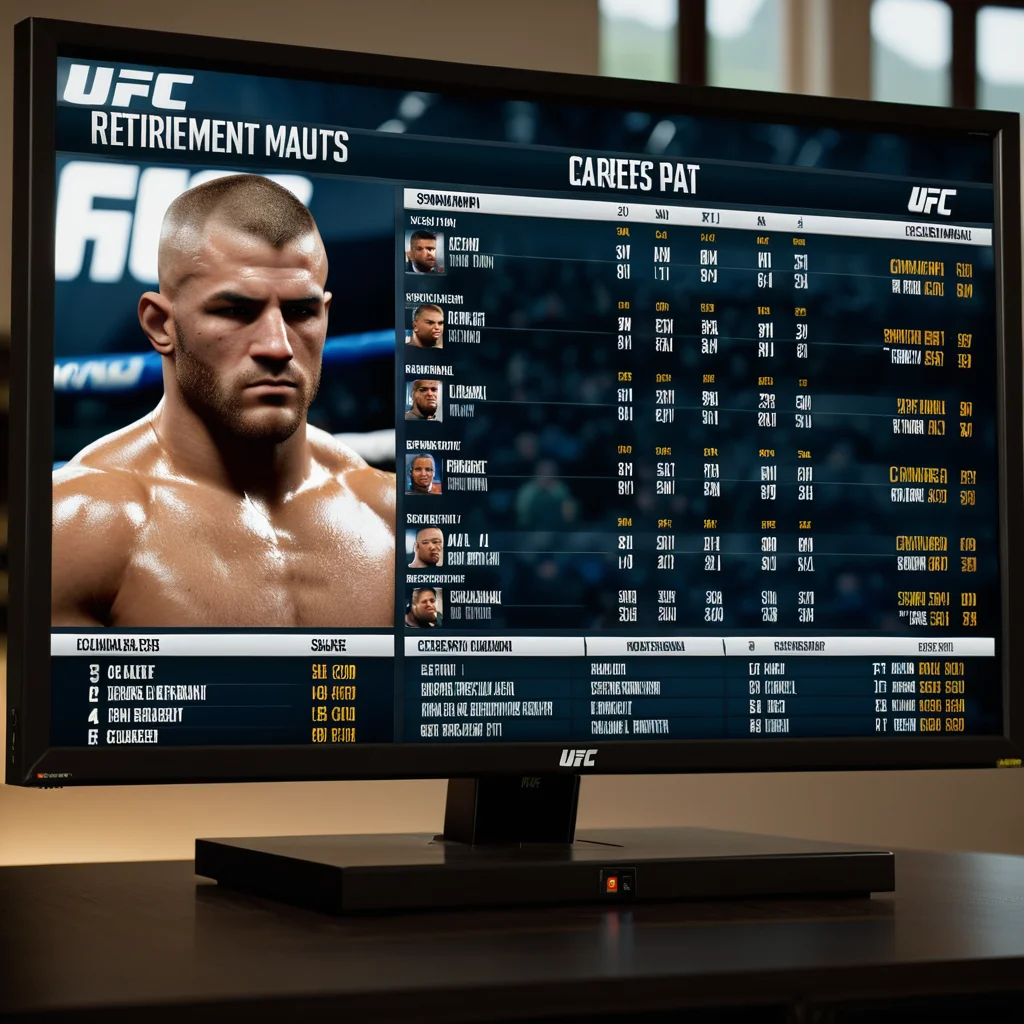
1. What Does Retiring a Fighter Mean in UFC 5?
Retirement in UFC 5 is the official end of your fighter’s career journey in Career Mode. Rather than simply stopping your playthrough, triggering a proper retirement generates a full career summary screen that tallies your wins, losses, title reigns, finishing rate, and overall legacy score. This final summary determines how your fighter is remembered in the game’s hall of fame system and unlocks achievements tied to career completion.
Retirement is not just a formality — it is a strategic decision. Choosing when to retire directly affects the quality of your legacy rating. A fighter who retires as a reigning champion with a strong record will receive a significantly higher legacy score than one who continues fighting past their prime and accumulates losses and injuries.

2. How to Retire Voluntarily in Career Mode
Voluntarily retiring your fighter in UFC 5 gives you full control over how and when your career ends. Here is how to do it step by step:
- From the Career Mode hub screen, open the main career navigation menu.
- Navigate to the My Fighter section or the Career Options submenu.
- Locate the Retire Fighter option within that menu.
- Select it and confirm your decision when the game prompts you.
- The game will then display your full career summary, including your record, championship history, and final legacy score.
For the best possible outcome, aim to retire immediately after a major title defense or following a high-profile victory. This ensures your legacy score reflects your fighter at their absolute best.
| Retirement Type | Voluntary at Peak | Forced by Game |
|---|---|---|
| Legacy Score | High — boosted by timing | Low — penalized by decline |
| Career Summary | Full highlights and accolades | Limited highlights shown |
| Rewards Unlocked | Maximum rewards available | Reduced reward pool |
| Player Control | Fully player-controlled | Game-triggered automatically |
🛒 Recommended Product
3. When the Game Forces Your Retirement
UFC 5 features a realistic fighter health and degradation system that mirrors real-world combat sports careers. If your fighter sustains repeated serious damage — particularly multiple knockouts or submission losses in a short span — the game will begin issuing warnings that forced retirement is approaching.
Warning signs to watch for include persistent injury flags before scheduled fights, noticeable drops in your fighter’s core attribute ceilings, and in-game dialogue from your coach or management team suggesting it may be time to step away. If you ignore these signals and continue competing, your fighter’s stats will continue to degrade and your legacy score will drop before the forced retirement is ultimately triggered by the game.
To avoid this outcome entirely, take rest periods seriously, withdraw from fights when injuries are severe, and keep a close eye on your fighter’s long-term health indicators in the career dashboard.
4. How to Retire an Opponent by Finishing Their Career
Beyond your own fighter’s retirement, UFC 5’s Career Mode includes narrative moments where you can effectively end a rival’s career by defeating them in a decisive and dramatic fashion. Finishing high-profile rivals via knockout or submission during pivotal rivalry matchups can trigger story events in which that opponent officially retires from the sport.
These moments are built into the career narrative’s rivalry arc system. When a rivalry reaches its climax fight — often framed as a grudge match or title unification bout — finishing your opponent convincingly rather than winning by decision is more likely to unlock the retirement narrative event for that fighter. This contributes to your own legacy as someone who not only won titles but ended careers, which is factored into certain legacy score bonuses.

5. Tips for Managing Your Fighter’s Longevity Before Retirement
Reaching retirement on your own terms requires disciplined career management from the very first fight. Apply these strategies consistently to extend your prime and exit the game with the strongest possible legacy score:
- Avoid absorbing unnecessary damage: Accept losses in close fights rather than trading shots and carrying damage forward into future bouts.
- Balance training and recovery: Use training camp periods to heal injuries before pushing stat gains, not the other way around.
- Challenge for titles strategically: Only pursue championship fights when your fighter is fully healthy and at a statistical peak.
- Act on health warnings immediately: Treat every post-fight medical warning as a mandatory signal to rest, not an optional suggestion.
- Plan your retirement fight in advance: Identify a marquee matchup — ideally a title defense — and designate it as your final fight so you can retire on the highest possible note.