
⚠️ This page connects you to Atovia’s partners and affiliate markets. We may receive a commission from affiliate partners for activities made through these links. Discount offers may change at any time according to policy! Rest assured, there are no additional costs to you! We hope this saves you time in finding the right items!
- What is customer financing, and how is it different from a business loan?
- Which option fits which business? (Quick picks)
- How we compared the options
- In-house installment plans: full control, full risk
- PayPal Pay Later: a published rate and a familiar checkout
- Affirm: per-transaction fees and fast payout
- Afterpay Pay in 4: short, interest-free installments for customers
- Side-by-side comparison
- Online store or high-ticket service: which fits better?
- Do the fees leave you with a profit?
- Refunds, payout timing and cash flow: what to check before you sign
- Pre-launch checklist
- FAQ
- Bottom line and next step
Offering installments can make a big purchase easier to say yes to, but every plan has a cost to you. Here is how the main options differ on fees, payout timing and refunds, so you can check the math before you sign up.
As an Amazon Associate I earn from qualifying purchases.
🛒 Recommended Product
- PayPal Pay Later US: 4.99% plus a fixed fee (fee page updated Nov 4, 2026)
- Affirm payout: ACH within 1-3 business days, net of fees
- Afterpay: 4 payments over 6 weeks, with refund fee adjustments at the next payout
- In-house plans: you carry collection and default risk
What is customer financing, and how is it different from a business loan?
{{image:1}}
Customer financing lets your customers split a purchase into payments. It is not money you borrow to grow the business.
That difference matters because the two get mixed up all the time. A business loan solves your funding problem. Customer financing solves your buyer’s affordability problem.
Who actually carries the risk in each model?
With an in-house plan, you set the terms, collect the payments and absorb unpaid balances. With a third-party provider, the provider handles approval and collection, and you usually pay a fee that is deducted from the sale.

Actual contract terms vary by provider, so treat this as the general picture, not a guarantee.
Which option fits which business? (Quick picks)
{{image:2}}
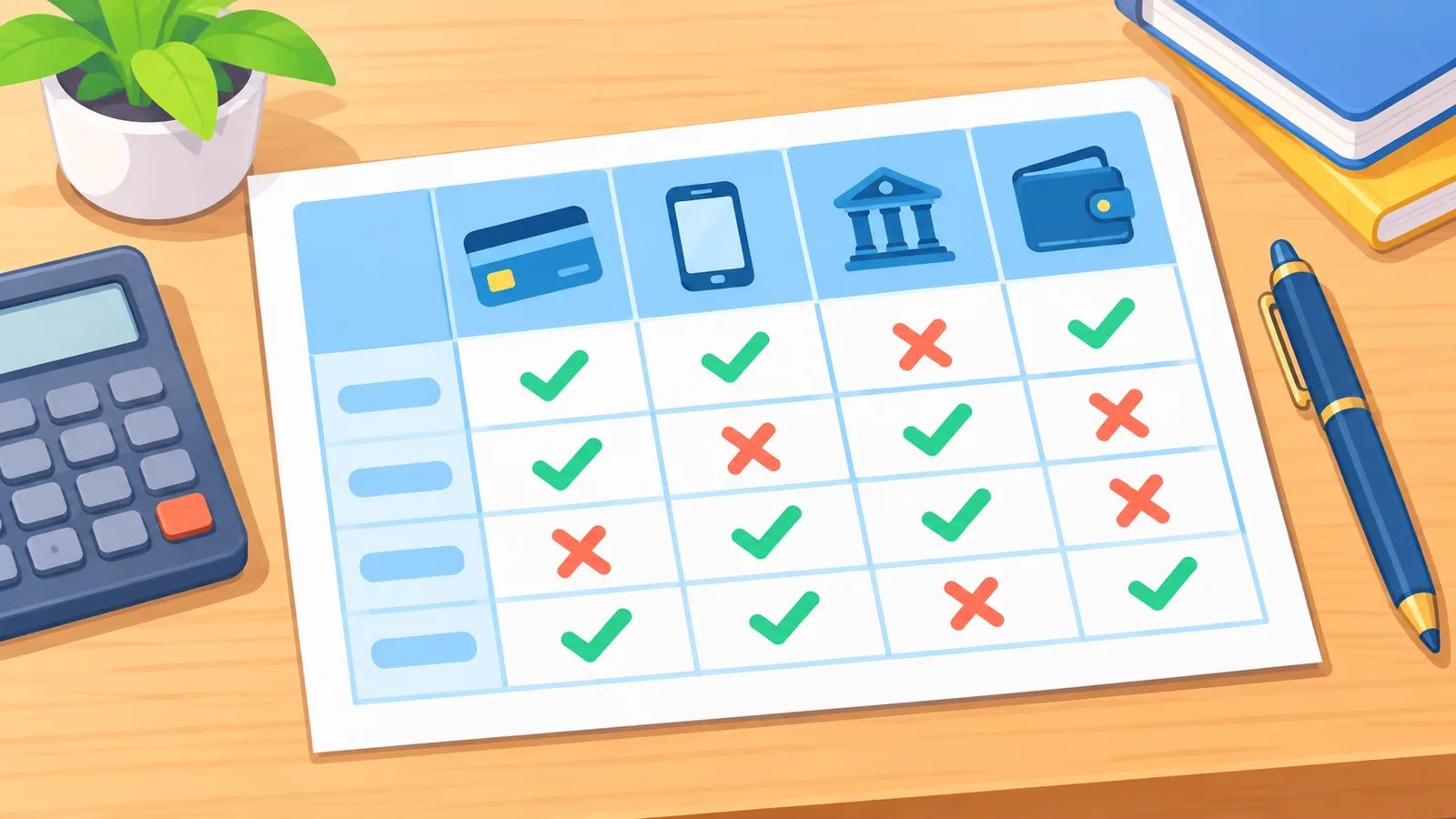
Here is a quick summary. Details for each option follow below.
| Option | Best fit | Main cost | Check first |
|---|---|---|---|
| In-house plan | Known, repeat customers | Working capital and admin time | How many late payments you could absorb |
| PayPal Pay Later | Merchants who want a published rate | 4.99% plus fixed fee (US) | The fixed fee and availability for your market |
| Affirm | Merchants who value quick payout | Per-transaction fee that varies | Your actual rate after account creation |
| Afterpay | Short, smaller purchases | Transaction fee | Settlement terms and refund handling |

How we compared the options
{{image:3}}
We compared each option on five points, based on the checklist QuickBooks suggests for choosing a provider.
- Transaction fees
- Payout timing
- Refund handling
- Platform and checkout fit
- Customer-side terms and limits

One honest note: the fees and availability here are US-based and can change. Always confirm current terms on the provider’s own page before you decide.
In-house installment plans: full control, full risk
{{image:4}}
You set the terms, but you also fund the wait and absorb any unpaid balances. That is the whole trade.
It can work for a business with repeat local customers it knows well. It gets painful when several customers pay late at once.

What working capital do you need to cover late payments?
Enough to run the business while money you are owed sits uncollected. Ask yourself how many delayed payments you could absorb before you struggled to cover rent, supplies or payroll.
Also budget time for tracking and chasing payments. That administrative work is a real cost, even though it never shows up as a fee.
PayPal Pay Later: a published rate and a familiar checkout
{{image:5}}
For US businesses, PayPal lists a Pay Later rate of 4.99% plus a fixed fee. Its merchant fee page was last updated on November 4, 2026.
The percentage is easy to find, which helps when you are comparing. The fixed fee and rates outside the US need a separate check on PayPal’s page for your market.
Affirm: per-transaction fees and fast payout
{{image:6}}
Affirm charges a per-transaction fee that varies by industry and business size. It states that there are no integration, annual or monthly fees.

On payout, Affirm says it sends the sale amount minus the merchant discount rate and transaction fee by ACH, within 1-3 business days after the transaction.
One caveat: your specific rate appears after you create an account. Do not budget around a number you have not seen yet.

Afterpay Pay in 4: short, interest-free installments for customers
{{image:7}}
Afterpay in the US lets customers pay in four interest-free installments over six weeks. Merchants pay a transaction fee, and settlement depends on the agreement you sign.
What happens to the fee when a customer returns an item?
Afterpay says it refunds the customer what has already been charged. It may then deduct that refund, minus the fee, from your account at the next payout.
🛒 Recommended Product
So a return can show up as a deduction later, not an instant adjustment. Plan your cash flow with that delay in mind.
Side-by-side comparison
{{image:8}}
| Option | Who carries default risk | Merchant cost | Payout timing | Refund note | Best for |
|---|---|---|---|---|---|
| In-house plan | You | Working capital and admin time | As customers pay | Your own policy | Known, repeat customers |
| PayPal Pay Later | Provider (confirm in contract) | 4.99% plus fixed fee (US) | Confirm in contract | Confirm in contract | Merchants wanting a published rate |
| Affirm | Provider (confirm in contract) | Varies; shown after sign-up | ACH in 1-3 business days | Confirm in contract | Merchants who value quick payout |
| Afterpay | Provider (confirm in contract) | Transaction fee | Per agreement | Fee-adjusted refund taken at next payout | Short, smaller purchases |
Online store or high-ticket service: which fits better?
{{image:9}}
Both can use customer financing, but the questions you ask differ. QuickBooks describes short-term pay-later plans as a possible fit for online retail. That is a general guide, not a promise for every shop.

Online retail with small baskets
Ask whether the fee still leaves a margin on a typical order. Check how smoothly the option plugs into your checkout and how returns are handled.
Service jobs with larger invoices
Ask whether the customer limit covers your typical invoice. Check the application steps too, since a long process can lose the sale.
Do the fees leave you with a profit?
{{image:10}}
Only if your margin on the order is bigger than the total cost of the financing. A higher sales total alone does not tell you.

Here is a hypothetical example. On a $500 order at a 4.99% rate, the percentage fee is about $25 before any fixed fee. If your margin on that order is $100, that fee alone takes a quarter of it.
Then add refund costs, delayed deductions and your own time. Vendor-reported sales lifts are marketing claims, so do not build your numbers on them.
Refunds, payout timing and cash flow: what to check before you sign
{{image:11}}
Before you sign, get clear answers to these points. QuickBooks also suggests looking at fees, customer limits, the application process and platform fit.
- How refund fees are treated
- How many days until you are paid
- Whether refunds are deducted from future payouts
- What limits apply to your customers
- What the application process involves
Pre-launch checklist
{{image:12}}
- Confirm the service is available for your business.
- Read the current fee page in full.
- Run per-order math on a typical sale.
- Test the checkout as a customer.
- Write your refund policy.
- Review the customer-facing terms.

Finally, check local consumer-credit rules, especially for in-house plans. They are not covered here.
FAQ
{{image:13}}
Is customer financing the same as a small business loan?
No. Customer financing helps your buyers pay in parts. A business loan gives you money to run or grow the business.

Should I run installments myself or use a provider?
Run them yourself only if you can fund the wait and absorb unpaid balances. Otherwise a provider takes on approval and collection in exchange for a fee.
When do I get paid on a financed sale?
It depends on the provider. Affirm says ACH within 1-3 business days after the transaction. For others, check your agreement.
What happens to fees when a customer gets a refund?
With Afterpay, the refunded amount minus the fee can be deducted from your account at the next payout. Confirm the exact treatment with any provider you choose.

Bottom line and next step
{{image:14}}
In short: choose in-house plans only for customers you know and can afford to wait on, and consider a provider if you want someone else to carry the collection risk.
Today, pick two options and run the same sample order through each fee page. The numbers will tell you more than any ranking.
Compare your own numbers: take your average order value and margin, then check the fee page of each provider you are considering.
Try Atovia’s free tool for this topic →
Want more comparisons and buying guides?
Citing this article
Source: Atovia (Atovia). https://atovia.kr
This article was written by Atovia with the help of AI tools. If you spot an error, please let us know via Contact and we will review and fix it.